Frank P. Ramsey Medal


The Frank P. Ramsey medal is awarded for distinguished contributions in decision analysis. Distinguished contributions can be internal, such as theoretical or procedural advances in decision analysis, or external, such as developing or spreading decision analysis in new fields. The specific award criteria for evaluating potential Ramsey Medal recipients are a candidate's:

  • Theoretical, methodological, and procedural contributions to decision analysis
  • Applications of decision analysis (including new uses and in new fields)
  • Other contributions promoting decision analysis (e.g. educational and public awareness)
  • Exceptional contributions to the Decision Analysis Society (e.g. service to society or journal)

A potential recipient need not meet all of the criteria, but contributions to each criterion are pertinent.

For this award, decision analysis is defined as a prescriptive approach to provide insight for decision making based on axioms that are logically consistent with the axioms of von Neumann and Morgenstern and of Savage. Key constructs of decision analysis are utility to quantify one’s preferences and probability to quantify the state of one's knowledge.

There are overlapping aspects of decision analysis with other fields such as behavioral decision research, probabilistic risk analysis, and engineering and economic analyses. Behavioral decision research addressing how people make decisions that has direct implications for improving the practice of decision analysis is a contribution to decision analysis. Models of uncertain possible consequences from scientific, engineering, and economic modeling that are useful for decision analysis are contributions.

The award includes an honorarium, a medal, and complimentary lifetime membership in the Decision Analysis Society.

Nomination Process 

Nominations can be submitted via email to the Chair of the Ramsey Award Committee at any time. To be considered for the 2026 Award, submissions should be received by June 1, 2026

A complete nomination consists of the following:

  • The name and affiliation of the nominee
  • The name and affiliation of the nominator
  • A short statement describing why the nominee should be considered for the award
  • The nominee's CV
  • Any other material that the nominator believes would be useful in evaluating the merits on the nomination

2026 Ramsey Award Committee

  1. Sam Bodily
  2. David Budescu
  3. Ahti Salo
  4. David Brown
  5. Vicki Bier
  6. Yael Grushka-Cockayne

2026 Ramsey Medalist


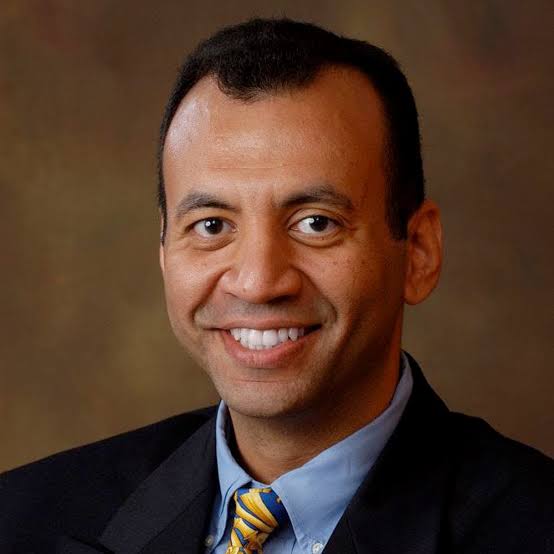
Professor Abbas is widely recognized for his deep and wide-ranging contributions to decision analysis, especially in utility theory, multiattribute utility theory, entropy methods, probability encoding, value of information, and decision-making under uncertainty. His scholarship has advanced both the foundations and applications of decision analysis, with influential work on maximum entropy utility, utility copulas, one-switch independence, multiattribute utility functions, target-based decision making, and risk-informed decisions in complex systems.

Ali's publication record has had a broad and lasting impact on the field. His work has appeared in leading journals including Operations Research, Decision Analysis, Management Science, the European Journal of Operational Research, Risk Analysis, and IEEE Systems Journal. He received the Decision Analysis Society Best Publication Award in 2011 for "Normative Decision Making with Multiattribute Performance Targets" with Jim Matheson, and the IEEE Systems Journal Best Publication Award in 2019 for work on the use of utility theory in engineering design. He has also received multiple Decision Analysis Society publication award runner-up honors, most recently, the Decision Analysis Journal Clemen-Kleinmuntz 2026 publication award. On the teaching side, Ali most recently won the 2026 Viterbi School of Engineering Excellence in Teaching award

Professor Abbas has made major contributions through books and teaching as well. He is co-author, with Ron Howard, of Foundations of Decision Analysis, a widely used textbook in the field. He is also the author of Foundations of Multiattribute Utility and Ethical Decision Quality: Building an Ethical Decision Culture, and the editor or co-editor of volumes including Next Generation Ethics: Engineering a Better Society and Improving Homeland Security Decisions. These works have helped shape how decision analysis is taught, extended, and applied in settings ranging from engineering design to public policy and homeland security.

Ali has also been a prominent ambassador for decision analysis in practice. At USC, he served as Founding Director of the Neely Center for Ethical Leadership and Decision-Making and as Director of the Center for Risk and Economic Analysis of Terrorism Events. Through these roles, and through his broader professional work, he has promoted the use of decision analysis in government, national security, transportation security, ethical leadership, public policy, and executive education. His work has engaged leaders and organizations including the Department of Homeland Security, the Transportation Security Administration, the U.S. military, and international policy audiences.

His service to the decision analysis community has been equally substantial. Professor Abbas has served as an Associate Editor for Operations Research and Decision Analysis, as an inaugural area editor for the Decision Analysis Department of IIE Transactions, and as guest editor for major special issues, including the Operations Research special issue honoring Kenneth Arrow and the Decision Analysis special issue on Decision Analysis and Social Media. He has also organized conferences and workshops, served on INFORMS and Decision Analysis Society committees, and mentored students who continue to contribute to the society.

Ali's impact extends beyond academia. He has worked to broaden decision education through public outreach, media, TEDx talks, decision-making social networks, and volunteer efforts teaching decision skills to youth, including at-risk teens and students in juvenile detention settings. His efforts have helped bring decision analysis to new audiences and demonstrated the field's relevance to personal, organizational, and societal decisions.

2025 Ramsey Medalist


Robert Nau is a Professor Emeritus of Business Administration in the Fuqua School of Business, where he was a member of the Decision Sciences area. He received his Ph.D. in Operations Research from the University of California at Berkeley in 1981. He was a full-time faculty member from 1985 to 2017, and he was previously on the faculty of the Freeman School of Business at Tulane University. He has also been a visiting faculty member at INSEAD in Fontainebleau, France, and Singapore. 

Professor Nau is an internationally known authority on mathematical models of decision making under uncertainty. His research has been supported by several grants from the National Science Foundation, and his papers have been published in journals such as Operations ResearchManagement ScienceAnnals of StatisticsJournal of Economic Theory, and the International Journal of Game Theory.  

One of the themes in Professor Nau’s research is that models of rational decision making in various fields are linked by a single unifying principle, namely the principle of no-arbitrage, i.e., avoiding sure loss at the hands of a competitor. This principle is central to modern finance theory, and it can also be shown to be the fundamental rationality concept that underlies Bayesian statistics, decision analysis, and game theory.  Professor Nau recently published a book that is based on his research in this area:  Arbitrage and Rational Decisions (Chapman and Hall, 2025).  In connection with this line of work, he formerly taught a course on Rational Choice Theory in the Ph.D. program that drew students from other departments and schools at Duke University

2024 Ramsey Medalist


2023 Ramsey Medalist

David V. Budescu (PhD, UNC Chapel Hill, 1980) is the Anne Anastasi Professor of Psychometrics and Quantitative Psychology at Fordham University.  He held tenured positions at the University of Illinois and the University of Haifa, and visiting positions at Carnegie Mellon University, University of Gotheborg, the Kellog School at Northwestern University, and the Israel Institute of Technology. His research is in the areas of human judgment, individual and group decision making under uncertainty and with incomplete and vague information, and statistics for the behavioral and social sciences.  He is Associate Editor of Decision Analysis and Psychological Methods, and on the editorial boards of Applied Psychological MeasurementJournal of Behavioral Decision MakingJournal of Mathematical PsychologyMultivariate Behavioral Research; Organizational Behavior and Human Decision Processes (1992-2002). He is past president of the Society for Judgment and Decision Making (2000-2001) and fellow of the Association for Psychological Science.


List of previous winners here.